No, maybe that wasn’t it. Words precede and surpass me, they tempt and alter me, and if I am not careful it will be too late: things will be said without my having said them. Or, at the very least, that wasn’t the only thing. My entanglement comes from how a carpet is made of so many threads that I can’t resign myself to following just one; my ensnarement comes from how one story is made of many stories. And I can’t even tell them all— a more truthful word could from echo to echo cause my highest glaciers to crumble down the precipice.” - Clarice Lispector

  • 27 posts
  • 2 comments
Joined 3 years ago
Cake day: December 9th, 2023

Russian forces reportedly recently attempted a mechanized assault in the Dobropillya tactical area for the first time in over a year. A Ukrainian military source reported on July 22 that Russian forces attempted a mechanized assault from the Ocheretyne direction (in the Russian near-rear southeast of Dobropillya) with an unspecified number of tanks and infantry fighting vehicles for the first time in over a year.[33] The source reported that Ukrainian forces repelled the assault and destroyed 80 percent of the Russian vehicles before they reached the frontline. Another Ukrainian military source implied on July 22 that Russian forces recently conducted a mechanized assault, though it is unclear if the source was referring to the attempted assault in the Dobropillya direction.[34] ISW is unable to confirm that Russian forces conducted a recent mechanized assault in this area of the frontline. Ukrainian military units participating in combat operations typically publish footage of Russian mechanized assaults within 48 to 72 hours of the assaults, so footage supporting these preliminary Ukrainian reports may emerge in the coming days.

Does this explain the reported 28 tanks lost on the 23rd? This sounds like a large battle.

Also note…

Russian forces continued limited offensive operations in the Novopavlivka direction on July 22 and 23 but did not advance as Ukrainian forces counterattacked.[42] A Russian milblogger claimed on July 22 that Ukrainian forces are counterattacking in the Novopavlivka direction using small groups, pickup trucks, and armored vehicles.[43]

cross-posted from: https://news.abolish.capital/post/66676

IBIRAMA-LA KLÃNÕ INDIGENOUS TERRITORY, Brazil — Zág, pronounced “zã,” is the Xokleng word for the Brazilian pine. This tree species, Araucaria angustifolia, is typical of the Atlantic Forest that runs along Brazil’s south and southeastern coast, and has been evolving on the planet for about 200 million years. Each female tree produces dozens of cones, which in turn carry hundreds of seeds. Known in Brazil as pinhão, the Brazilian pine seed is a nut eaten by at least 22 animal species as well as humans, who rely on it for both nutrition and income. For some Indigenous peoples, however, it means more than food. It’s part of their culture, history, and origin myths. That’s the case for the Xokleng people, also known as the Laklãnõ, in what is today Santa Catarina state. In their villages, people are even named after the tree. “Brazilian pines are sacred to us,” says Carl Gakran, executive director of the Zág Institute. “You can’t tell the story of our people without speaking of them. Our creation myth says the protective animal was made from that tree, so it appears in the very first story.” Carl decided to do something for the pines in 2016, after learning that the species was critically endangered as a result of deforestation, urban expansion, and logging. Currently, Brazilian pine forests are estimated to cover less than 3% of their original range, which once stretched across much of the states of Paraná, Santa Catarina and Rio Grande do Sul, with small patches…This article was originally published on Mongabay


From Conservation news via This RSS Feed.

During repairs near her home, she said a worker stopped to tell her what he had found beneath the surface, close to a water line.

“Hey, chief, I saw the fuel on your property. A pool of fuel,” she recalled him saying.

But there was no equipment to clean it up, she said, so the excavation was covered again.

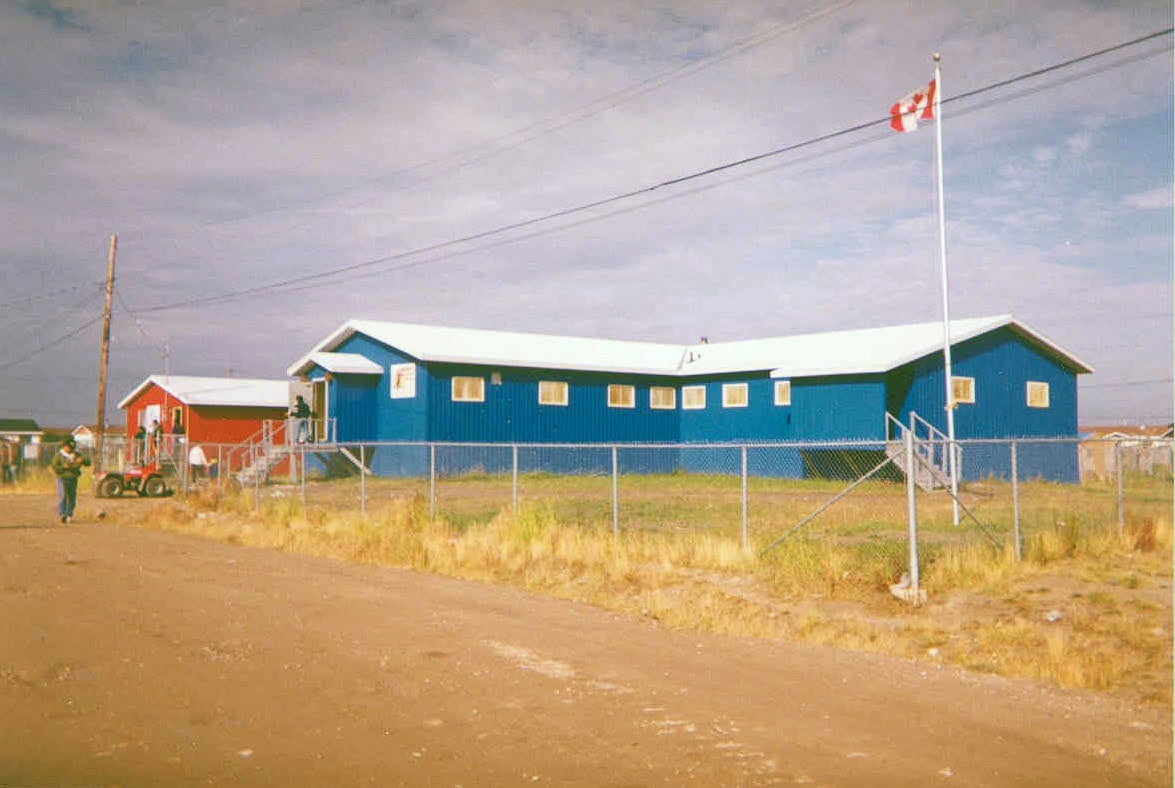
For community leaders, these discoveries are reminders of what they describe as a decades-long problem of diesel contamination beneath Attawapiskat, a Cree community in Ontario’s Far North on the western side of James Bay. It’s an issue both the federal and Ontario governments have known about for years but have failed to fully address.